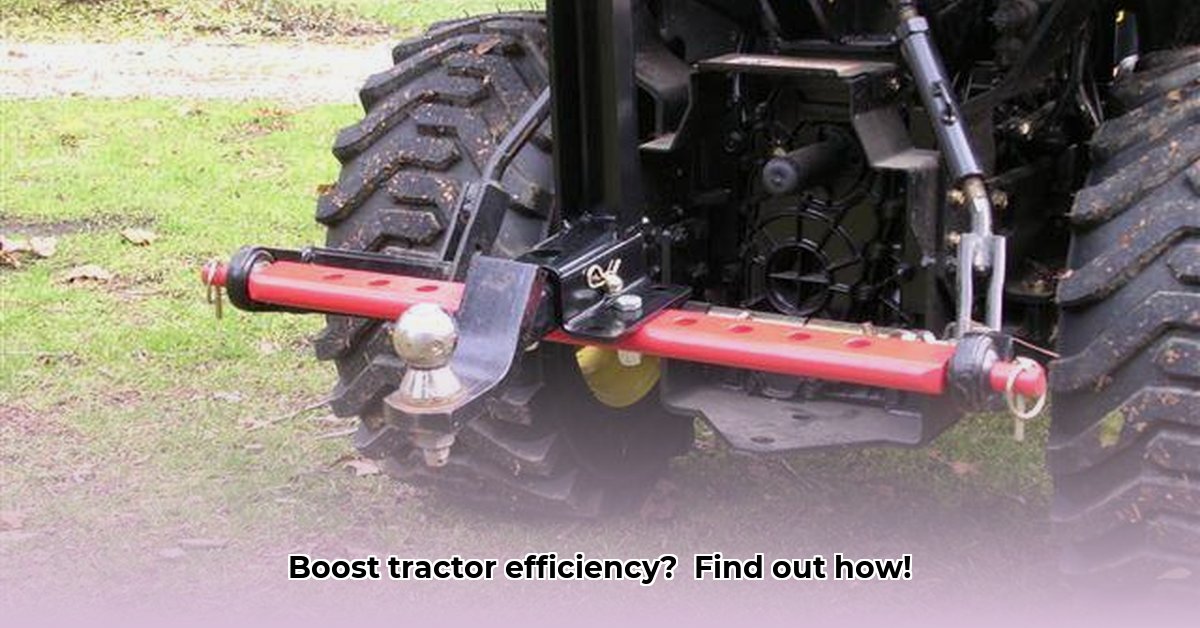
Tractor Drawbars: Your Guide to Efficient Pulling Power
Tractor drawbars are the essential link between your tractor and towed implements like plows, seeders, and trailers. A properly functioning drawbar ensures smooth operation, increased productivity, and enhanced safety. This guide covers various drawbar types, selection, installation, maintenance, and troubleshooting. Understanding drawbars is key to maximizing your tractor's efficiency. For more detailed specifications, check out this helpful resource.
Understanding Tractor Drawbars: The Foundation of Field Work
A tractor drawbar is the sturdy connection enabling your tractor to pull implements. It's the fundamental component transferring power for tasks like tilling, hauling, and spreading fertilizer. A properly functioning drawbar is crucial for efficient and safe tractor operation. Without one, your tractor's power remains largely untapped.
Types of Tractor Drawbars: Choosing the Right Tool for the Job
Several drawbar types cater to different needs:
Fixed Drawbars: These are permanently attached, offering simplicity, durability, and reliability. Ideal for consistent tasks, they lack versatility.
Adjustable Drawbars: These allow hitch length adjustment, accommodating different implements and field conditions. This improves traction and reduces strain on the tractor and equipment.
Quick-Attach Drawbars: Designed for speed, these facilitate fast implement changes, maximizing efficiency, particularly during busy seasons. However, they're generally more expensive.
Category Drawbars (I, II, III): Categorized by size and weight capacity, these ensure safe and compatible connections between the tractor and implements. Matching the category is a critical safety precaution.
Here's a comparison table summarizing the pros and cons:
| Drawbar Type | Pros | Cons | Ideal Use |
|---|---|---|---|
| Fixed | Simple, durable, reliable | Inflexible, limited adaptability | Consistent tasks, heavy-duty applications |
| Adjustable | Versatile, adapts to various implements | More complex, potential misalignment risk | Varied tasks, challenging field conditions |
| Quick-Attach | Fast implement changes, convenient | Costlier, potential increased maintenance | Frequent implement changes, time-sensitive work |
| Category (I, II, III) | Standardized for safety and compatibility | Requires careful category matching | Ensuring secure and correct implement connection |
Picking the Perfect Drawbar: Factors to Consider
Selecting the right drawbar involves careful consideration:
Tractor Compatibility: Consult your tractor's manual to ensure appropriate drawbar selection. Incorrect drawbar selection can lead to significant problems.
Implement Type and Weight: The drawbar must handle the weight and size of the implements it will tow. Using an inadequate drawbar can result in damage or injury.
Weight Capacity: Never exceed the drawbar's weight limit. Overloading is a major safety hazard and could lead to catastrophic failure.
Hitch Type: Ensure the drawbar's hitch type matches your implements. Incompatibility can lead to unsafe and ineffectual operations.
Installing and Using Your Tractor Drawbar: A Step-by-Step Guide
Installing a drawbar is straightforward but requires precision:
- Preparation: Gather necessary tools and consult your tractor's manual.
- Secure Attachment: Carefully attach the drawbar to the tractor's hitch, ensuring a firm, secure connection.
- Adjustment (if applicable): Adjust adjustable drawbars to the proper length for your implement.
- Implement Connection: Attach the implement, double-checking securement.
- Test Run: Before full operation, conduct a thorough inspection and test run with a light load.
Maintaining Your Drawbar: Keeping it Running Smoothly
Regular maintenance is crucial for longevity and safety:
- Regular Inspections: Check for wear, damage, or loose connections.
- Lubrication: Lubricate moving parts as recommended.
- Bolt Tightening: Periodically check and tighten bolts and connections.
Common Drawbar Problems and Solutions:
- Bent Drawbar: Usually requires repair or replacement.
- Loose Connections: Tighten loose bolts or connections immediately.
- Hitch Misalignment: Adjust the hitch to ensure proper alignment.
Safety Precautions: Prioritizing Safety When Using Tractor Drawbars
Safety is paramount:
- Wear Safety Gear: Always use appropriate safety equipment (e.g., sturdy shoes, gloves, eye protection).
- Secure Connections: Double-check all connections before operation.
- Weight Limits: Never exceed the drawbar's weight capacity.
- Situational Awareness: Be aware of surroundings.
- Regular Safety Checks: Inspect the drawbar and connections before each use.
Conclusion: Maximize Efficiency and Safety with Proper Drawbar Usage
Choosing, installing, and maintaining the correct drawbar is crucial for efficient and safe tractor operation. By following this guide, you can significantly improve your farm's productivity while prioritizing safety. Remember, regular maintenance and adherence to safety guidelines are key to maximizing your tractor's potential and ensuring a safe working environment.